The real estate and property management industry has long been defined by paperwork, manual processes, and reactive decision-making. Lease reviews that take hours, maintenance tickets that pile up unanswered, and rent roll reconciliations done in spreadsheets, these are the daily realities for property teams managing hundreds or thousands of units. That's changing fast.
AI agents for real estate are moving from novelty to necessity. Global PropTech investment hit $16.7 billion in 2025, a 67.9% year-over-year increase, with capital flowing heavily toward AI-enabled platforms that can demonstrate real returns.
This article breaks down the most impactful AI agent use cases for real estate and property management teams today, with a focus on where intelligent automation is already delivering measurable results.
Why Real Estate Is Ripe for AI Agent Automation
Property management is fundamentally a document-heavy, data-intensive operation. Every lease, work order, payment record, and compliance obligation generates information that needs to be captured, interpreted, and acted upon, often across multiple systems, formats, and teams.
The challenge isn't a lack of data. It's the inability to turn unstructured, high-volume inputs into timely, structured insights. Property teams routinely spend hours on tasks that yield little strategic value: manually extracting terms from lease documents, reconciling arrears across spreadsheets, triaging maintenance requests, and generating reports for leadership.
AI agents are purpose-built to absorb that burden. Unlike simple automation tools, they can read documents, reason over data, generate structured outputs, and integrate with existing property management systems, all without requiring constant human intervention.
1. Automated Lease Abstraction
Lease documents are notoriously complex. Each one contains dozens of critical data points, rent schedules, escalation clauses, renewal options, termination conditions, tenant obligations, and compliance requirements. Extracting this information manually is tedious, inconsistent across reviewers, and prone to error, especially when dealing with diverse lease formats and unstructured text.
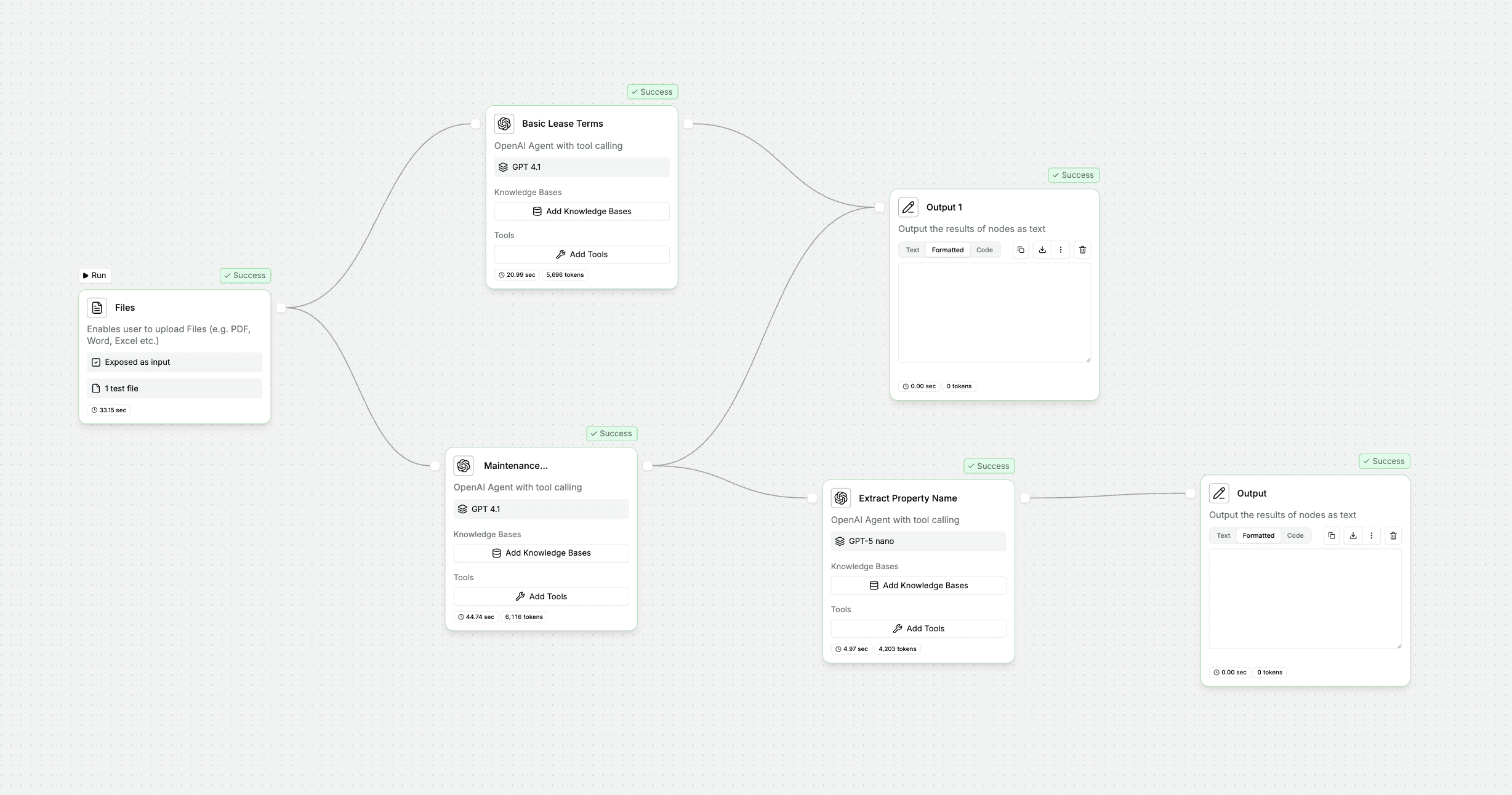
A Lease Abstractor Agent solves this by ingesting lease documents in bulk and automatically extracting key structured data into the property management system. It normalizes information into a consistent schema regardless of the original format, reducing errors and accelerating reporting cycles.
The results are significant. In a documented deployment at a national property management company responsible for tens of thousands of residential and commercial units, lease review time dropped by 70% after implementing an AI-powered lease abstraction workflow. What previously required hours of manual review per document was reduced to minutes, with higher consistency and fewer downstream errors.
Industry data reinforces this: AI reduces lease processing time by an average of 40%, and AI-powered abstraction tools can process upward of 100 documents per hour.
2. Work Order Intake and Triage
Maintenance operations are one of the highest-volume, highest-friction workflows in property management. Work orders arrive through multiple channels, tenant portals, emails, phone calls, and must be categorized, prioritized, routed to the right vendor or technician, and tracked to resolution. Done manually, this process creates bottlenecks that frustrate tenants and inflate response times.
An AI agent for work order intake can receive incoming requests, classify them by urgency and type, route them to the appropriate team or vendor, and update the property management system automatically. It can also flag patterns, recurring issues in a specific building, vendors with high resolution times, that help managers make better operational decisions.
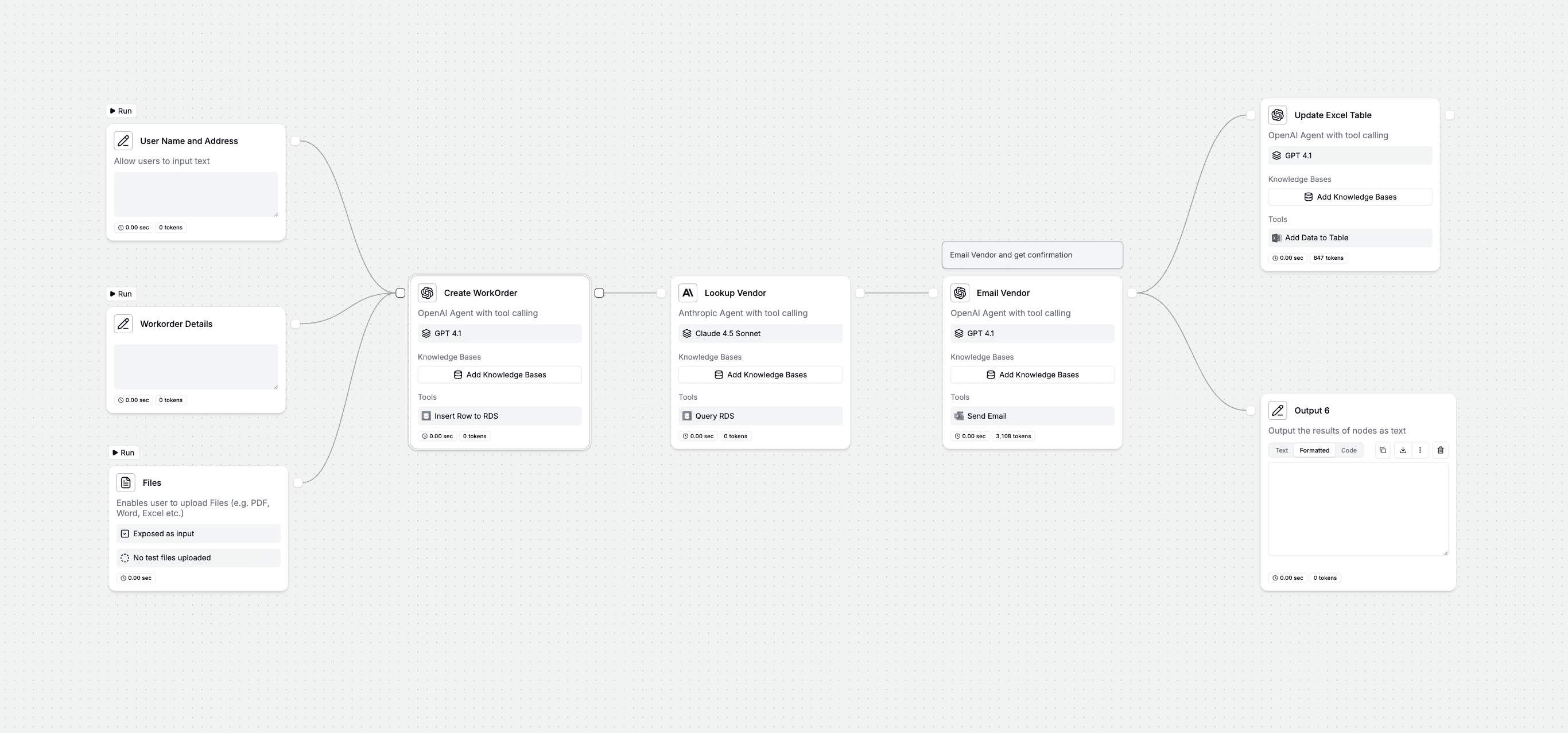
One property management organization that deployed an AI-powered work order agent cut response times by 50%. That improvement had a direct impact on tenant satisfaction scores and reduced the administrative load on property teams, who could redirect their attention to higher-value work.
Predictive AI takes this a step further: AI-powered systems now detect maintenance issues 70% earlier than traditional reactive approaches, and sensor-driven models can predict HVAC failures with 80% accuracy, allowing teams to act before tenants ever notice a problem.
3. Arrears Detection and Portfolio Reporting
Tracking tenant arrears across a large portfolio is one of the most operationally demanding tasks in property management. It involves reconciling spreadsheets, payment records, rent rolls, and communication logs, then identifying patterns, segmenting by risk, and preparing reports for leadership. By the time those reports are ready, conditions have often already shifted.
An Arrears Analyst Agent continuously processes payment records and communication logs to identify delinquency patterns in real time. It calculates aging analysis, surfaces units with rising risk, and generates structured reports that allow property managers to act proactively, engaging tenants early, tailoring collection strategies, and giving leadership current visibility into portfolio performance.
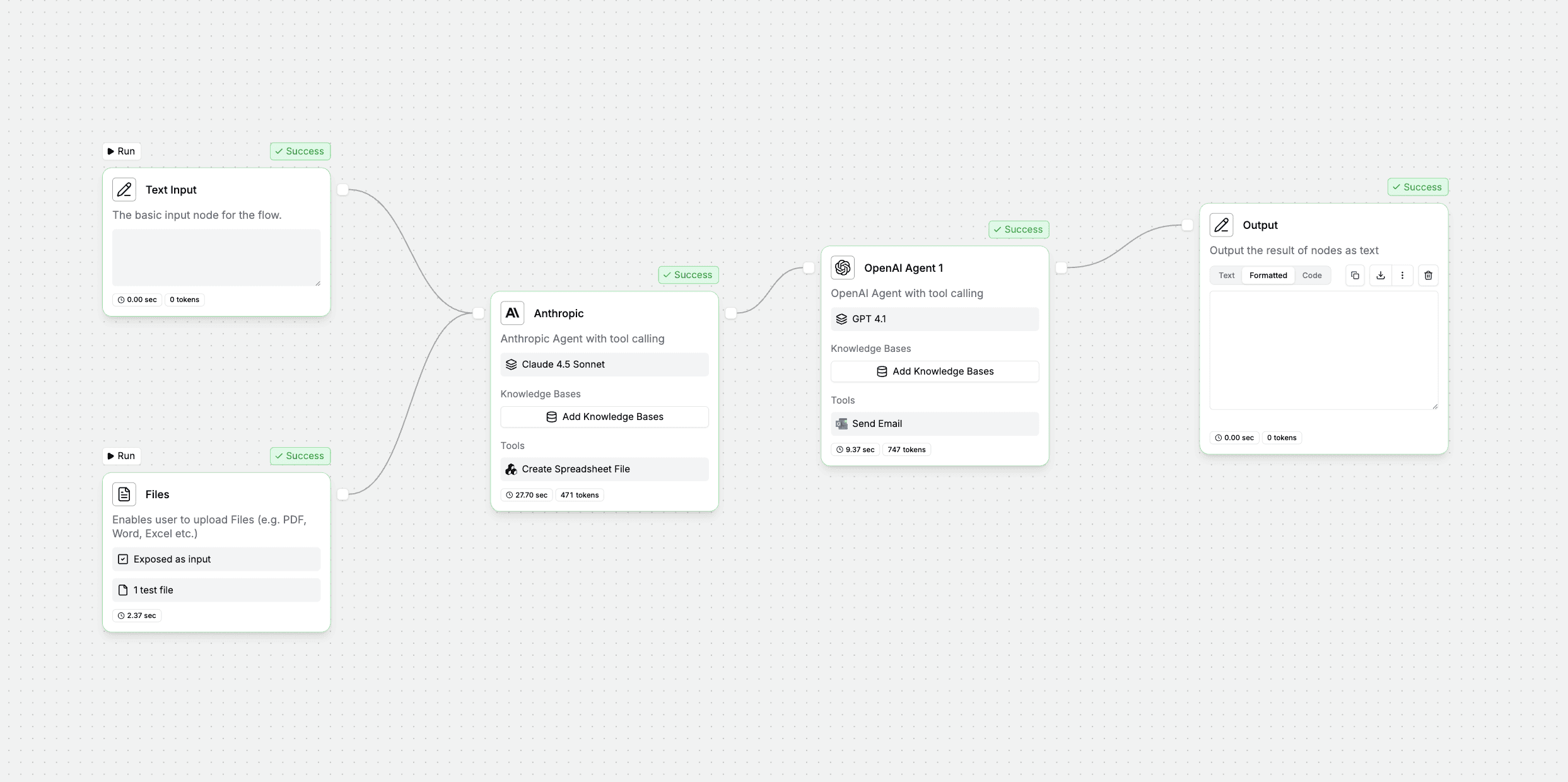
The shift from reactive to proactive arrears management is significant. AI-driven collections have been shown to improve bad debt recovery by 22%, while automated rent collection workflows boost on-time payments to 95%. Real-time arrears reporting allows teams to act on trends in days rather than weeks.
4. Tenant Communication and Support
Tenant inquiries are constant and often repetitive: questions about lease terms, maintenance status updates, payment confirmations, building policies. Handling these manually consumes staff time and creates inconsistent experiences.
AI-powered tenant communication agents can handle the majority of routine inquiries around the clock, answering questions, providing status updates, routing complex issues to the appropriate team member, and logging every interaction. They can operate across email, chat, and tenant portals, and they can be trained on building-specific knowledge bases to ensure accurate, consistent responses.
The numbers tell a compelling story: AI chatbots now handle 70% of tenant inquiries without human intervention, and 92% of tenants report satisfaction with AI virtual assistants. Self-service portals powered by AI reduce inbound calls by 50%, freeing property teams for work that genuinely requires human judgment.
5. Document Processing and Compliance Automation
Beyond leases, property management teams deal with a constant stream of documents: vendor contracts, insurance certificates, inspection reports, regulatory filings, and more. Each document type requires review, classification, data extraction, and often some form of action or follow-up.
AI agents can automate the full document processing pipeline, ingesting files, classifying them by type, extracting relevant data, flagging compliance gaps, and routing documents to the appropriate system or team member. For organizations operating in regulated environments, this creates a more defensible compliance posture and reduces the risk of missed obligations.
AI compliance checks now run 90% faster than manual processes, and workflow automation reduces document processing errors by 62%. Legal fees associated with contract review have been shown to drop by 25% when AI handles initial document analysis.
6. Predictive Maintenance and Asset Management
For property managers overseeing large portfolios, maintaining physical assets is both a cost center and a tenant satisfaction driver. Reactive maintenance, waiting for something to break before fixing it, is expensive and disruptive. Predictive maintenance, powered by AI and sensor data, flips that model.
AI agents that integrate with building management systems can monitor equipment performance in real time, flag anomalies before they become failures, and automatically generate work orders for preventive action. The operational impact is substantial: predictive AI cuts maintenance expenses by 28%, extends equipment lifespans by 25%, and reduces overall downtime by 50%.
For portfolio-scale operators, this translates directly into lower capital expenditure, higher net operating income, and better tenant retention.
7. Market Analysis and Investment Intelligence
On the investment and acquisition side of real estate, AI agents are becoming indispensable tools for research, valuation, and due diligence. AI-powered automated valuation models now achieve median error rates of 2.8%, down from 10 to 15% five years ago, enabling near real-time pricing intelligence.
AI agents can synthesize market data, comparable transactions, demographic trends, and property-level financials to produce investment memos, risk assessments, and portfolio performance reports at a fraction of the time previously required. For asset managers and acquisitions teams, this means faster decisions with better data.
The Case for Enterprise-Grade AI in Property Management
The use cases above aren't theoretical. They're being deployed today by property management organizations that recognize the operational and competitive advantages of moving beyond manual workflows.
What separates successful deployments from failed ones is rarely the AI technology itself, it's the infrastructure around it. Enterprise-grade platforms provide the security controls, data governance, and integration capabilities that property management organizations require. Data privacy, audit trails, and the ability to connect with existing systems like AppFolio, AWS RDS, or other property management platforms are non-negotiable requirements for teams managing sensitive tenant and financial data.
Human-in-the-loop controls also matter. Not every decision should be fully automated. The best AI agent deployments in real estate preserve human oversight for high-stakes actions, lease approvals, escalated tenant disputes, significant financial decisions, while automating the high-volume, lower-stakes work that currently consumes most of a property team's day.
What This Means for Property Teams
The cumulative impact of AI agent automation across these use cases is substantial. Property teams that have deployed intelligent workflows report:
Lease review time reduced by 70%
Work order response times cut by 50%
Administrative overhead down 35%
Tenant satisfaction scores measurably improved
Real-time visibility into arrears and portfolio performance
These aren't incremental improvements. They represent a fundamental shift in how property management organizations operate, freeing teams from document wrangling and reactive firefighting so they can focus on tenant relationships, portfolio strategy, and performance optimization.
The organizations that are moving fastest aren't necessarily the largest. They're the ones that have recognized that the bottleneck isn't headcount, it's the manual, document-heavy workflows that prevent their people from doing their best work.
Getting Started with AI Agents for Real Estate
The path to deploying AI agents in property management doesn't require a multi-year technology transformation. Modern platforms allow teams to build and deploy intelligent workflows in days, connecting to existing systems and knowledge bases without extensive engineering resources.
The most effective starting points are the highest-friction workflows: lease abstraction, work order management, and arrears reporting. These are well-defined processes with clear inputs and outputs, making them ideal candidates for AI automation. Once those are running, the same infrastructure can be extended to tenant communications, compliance monitoring, and predictive maintenance.
The real estate industry is at an inflection point. Agentic AI systems capable of executing multi-step workflows autonomously are expected to reach mainstream adoption in the industry by 2026, 2027. The organizations building that capability now will have a structural advantage, in operational efficiency, tenant experience, and portfolio performance, over those that wait.
If you're ready to see what AI agents can do for your property management operations, book a demo with StackAI to explore how intelligent workflows can be deployed across your portfolio. Learn more about StackAI for property management here.

Hakan Gureren
Enterprise AI at StackAI





